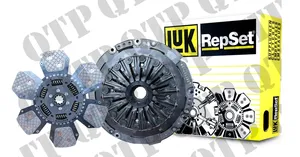


When your clutch starts slipping during heavy pulling or you're fighting to get smooth engagement, it's time to address the problem properly. This isn't your standard single-disc setup—it's a split torque dual clutch system designed for tractors that work hard. The main clutch disc handles normal driving while the smaller 6-paddle disc manages PTO power, giving you the torque capacity to handle whatever you throw at it without slipping or grabbing. What You're Getting LUK 13-inch (330mm) diaphragm pressure plate for reliable, long-lasting clamping force Split torque design with main transmission disc plus separate 6-paddle PTO disc for superior power handling Main hub with 1-3/4 inch (27 spline) for transmission, loose disc with 1-1/4 inch (10 spline) for PTO 2-port hydraulic release bearing provides smooth, consistent clutch operation Handles higher torque loads than standard single-disc clutches without slipping Built for Real Farm Work This kit fits a wide range of John Deere workhorses from the 2040 through 3640 in the 40 series, up through the 50 series tractors like the 2650, 2850, 3050, and 3350, plus select 55 series models. These are the tractors running loader buckets, pulling chisel plows, powering big balers, and handling the tough jobs where you need reliable power transfer. The split torque design means you can run heavy PTO implements while still having full clutch control for field work. Made to Last LUK components are what John Deere uses from the factory, so you know you're getting quality that matches your tractor. The diaphragm design provides even clamping pressure across the entire clutch surface, and the hydraulic release system eliminates the adjustments and wear points of mechanical linkages. This isn't a quick fix—it's a proper repair that'll handle years of hard work. Installation Notes This is a tractor-splitting job that requires proper equipment and workspace. The kit weighs over 30kg, so plan your lifting accordingly. You'll need to bleed the hydraulic release system after installation, and there's a service bulletin available to guide you through the process. Take time to inspect for rear main seal leaks while you've got everything apart—oil contamination will ruin your new clutch fast.