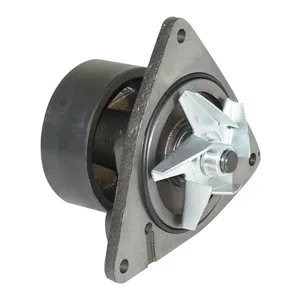


When your big tractor starts running hot during heavy fieldwork or you notice coolant dripping under the front of the engine, it's time for a new water pump. These high-horsepower machines generate serious heat, and a failed water pump can turn a $200 repair into a $20,000 engine rebuild faster than you can shut it down. This replacement pump keeps coolant flowing properly through your expensive powerplant so you can focus on getting work done instead of worrying about overheating. Key Features Heavy-duty impeller design moves maximum coolant flow even when radiators get partially plugged Precision-balanced to eliminate vibration that destroys bearings and seals prematurely Premium bearing and seal construction handles the demands of high-pressure cooling systems Cast iron housing matches OEM durability and thermal expansion characteristics Direct replacement design bolts on without modifications or adapters Built for Real Farm Work This water pump serves the heavy hitters in your operation - T8000 and T9000 series tractors pulling wide tillage tools, TJ four-wheel drives handling the biggest implements, and Case MX/Maxxum tractors that form the backbone of large farming operations. When you're running 200-400+ horsepower engines for hours on end, often in dusty conditions that challenge cooling systems, engine cooling becomes critical to preventing costly breakdowns during time-sensitive field operations. Made to Last Water pumps on high-horsepower tractors face extreme demands - they're spinning thousands of times per minute, moving huge volumes of coolant while dealing with pressure, heat, and vibration. This replacement pump uses quality bearings that won't fail prematurely and seals designed to handle the glycol-based coolants these engines require. With proper coolant maintenance, you can expect this pump to last 3,000-5,000 hours of hard use. Installation Notes Thoroughly clean all mating surfaces and use new gaskets - even small leaks can cause overheating issues down the road. Replace the thermostat while you're there, and inspect all coolant hoses for soft spots or cracks. Flush the cooling system completely before refilling with fresh coolant meeting manufacturer specifications. After installation, run the engine with the radiator cap off until the thermostat opens, ensuring all air is purged from the system.