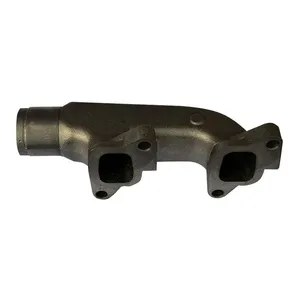
If you're hearing that telltale ticking sound coming from your Ford TW or 8000 series tractor's exhaust, or noticing soot stains around the manifold connections, it's time to replace that rear manifold section. That ticking exhaust leak isn't just annoying - it's costing you power and filling your cab with fumes. You'll know yours needs replacement when you hear that telltale ticking that speeds up with engine RPM, see black soot around manifold joints, or smell exhaust in the cab. This twin-port manifold rear section restores proper exhaust flow and gets you back to work without distractions. What You're Getting Twin-port design specifically engineered for Ford's exhaust system layout Robust cast iron construction that handles extreme thermal cycling without cracking Precision-machined mounting surfaces for leak-free sealing Direct replacement that bolts right in place of your original manifold Maintains proper exhaust flow characteristics for optimal engine performance Built for Real Farm Work These Ford TW and 8000 series tractors are serious workhorses that handle everything from heavy fieldwork to PTO operations. The TW series includes models like the TW5, TW10, TW15, TW20, TW25, TW30, and TW35, while this also fits the 8210, 8530, 8630, 8730, and 8830 models. Whether you're pulling heavy implements, running a big PTO-driven baler, or doing transport work, these machines need proper exhaust flow to deliver their full horsepower. Made to Last This manifold features robust cast iron construction designed to handle extreme thermal cycling. The casting is engineered to resist cracking from repeated heating and cooling cycles that destroy inferior manifolds. The twin-port design handles the high exhaust volumes these big engines produce, channeling heat and pressure away from sensitive engine components. Installation Notes Exhaust manifold replacement is best done with a cool engine to avoid burns and seized fasteners. Start by soaking all exhaust studs with penetrating oil well before the job - these are notorious for breaking. Begin by applying penetrating oil to old studs days before the job - they're notorious for breaking. This is the rear piece of the twin-port manifold system, so make sure you're ordering the correct section for your repair. Clean all mounting surfaces thoroughly and use new gaskets for a proper seal.
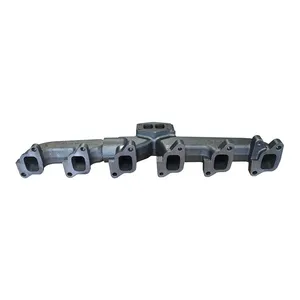
When you start hearing that telltale ticking sound from your turbo Ford New Holland's exhaust manifolds, or notice soot stains around the manifold joints, it's time to replace both sides before a small leak becomes an expensive turbo problem. This complete kit gives you everything needed to restore proper exhaust flow to your turbocharged engine and protect that expensive turbo from damage. What You're Getting Complete two-piece manifold set - includes both short side (QTP-1030) and long side (QTP-2353) manifolds Precisely cast manifolds designed specifically for turbo applications with proper exhaust scavenging Direct OEM replacement quality that maintains exact port geometry for optimal turbo spool-up Heavy-duty construction that handles the extreme heat and pressure cycling of turbocharged engines Both manifolds work together to deliver balanced exhaust flow critical for turbo performance Built for Turbocharged Performance Your Ford New Holland TW Series and high-horsepower 8000 Series tractors represent serious power, and their turbocharged engines demand precise exhaust flow. These aren't just utility tractors - they're the workhorses running big plows, heavy discs, and demanding PTO applications where full power and fuel efficiency matter. The turbo depends on proper exhaust scavenging to spool up correctly and deliver the boost your engine needs. Made to Last Turbocharged engines create extreme conditions - high exhaust gas temperatures, constant pressure fluctuations, and thermal cycling that cracks inferior castings. These manifolds are built from materials that handle the punishment, maintaining their seal and structural integrity through thousands of hours of operation. Quality casting prevents the warping and cracking that plague cheaper replacements. Installation Notes This is a complete replacement job - you'll need both manifolds, new gaskets, and fresh studs for a proper repair. Don't try to reuse old gaskets or compromised hardware on a turbo application. Soak the old studs with penetrating oil days before starting - they're notorious for breaking. Take your time with the torque sequence and heat cycling to prevent immediate leaks that can damage your turbo.