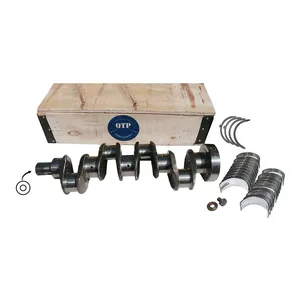


When your tractor's engine starts knocking or you're dealing with worn main bearings, there's no getting around it—you need a reliable crankshaft. This isn't a repair you can put off. These Massey Ferguson tractors powered by Perkins engines are workhorses found on farms running everything from grain operations to cattle ranches. Whether you're running a disk, planting corn, cutting silage, or pulling heavy implements , a solid crankshaft keeps your engine running smooth and your operation moving forward. What You're Getting Forged construction that handles the stress and vibration of heavy farm work Precision-balanced assembly for smooth operation and reduced engine wear Single-bolt nose design matches original specifications exactly Complete assembly ready to install—no need to hunt down separate bearings Built to handle the demanding requirements of diesel engines under load Built for Real Farm Work These Massey Ferguson tractors powered by Perkins engines are workhorses found on farms running everything from grain operations to cattle ranches. The 100 and 200 series are popular mid-range tractors perfect for operations handling 200-500 acres, while the 500 and 600 series handle heavy-duty work like deep tillage, large hay operations, and commercial farming. This crankshaft assembly also fits a wide range of Landini and Same tractors, plus industrial equipment where Perkins A4.236 and A4.248 engines do the heavy lifting. Made to Last Farm engines don't get babied, and this crankshaft is built for that reality. The forged construction handles the constant stress cycles of diesel operation, while the precision machining ensures proper oil clearances and bearing life. The flame ring design is specifically engineered for wet liner engines where the cylinder liner extends into the combustion chamber. This creates a critical seal that prevents combustion gases from leaking into the cooling system. Good to Know This is a substantial part—over 30 kilograms—so it requires freight delivery. Plan your engine rebuild accordingly and have your hoist ready. The single-bolt nose matches the original design, so you can reuse your existing pulley and damper. Take the time to check your main bearing clearances during installation, and don't forget to prime the oil system before first startup.